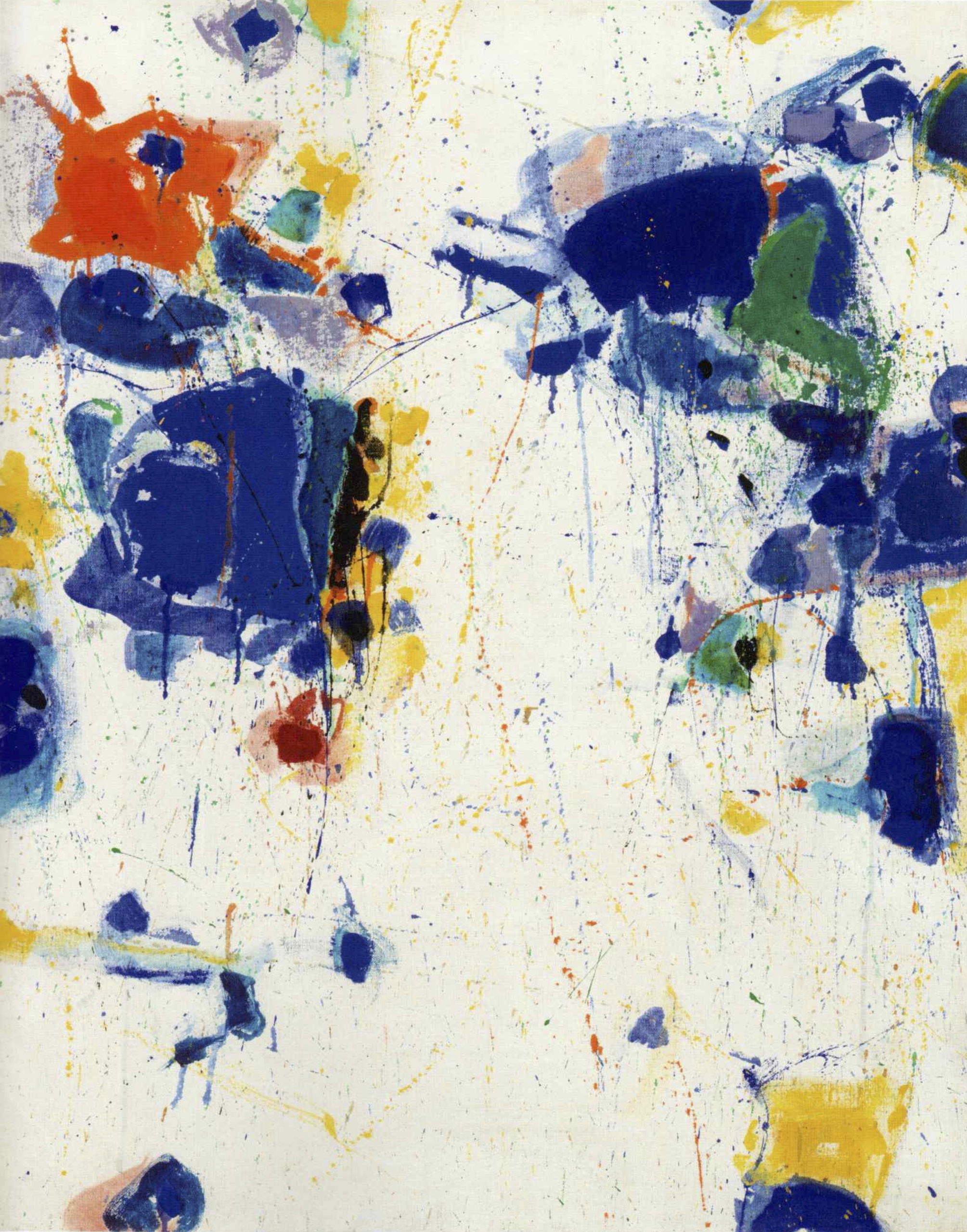
Sam Francis
These days we may feel relatively familiar with seeing abstract paintings like this one. Some people may see a few blobs and splatters of paint and not think anything more of it. But when you see a painting of this kind within a gallery which takes you chronologically through the centuries of European and Western art, you start to see it differently. You see how painters tried to represent the world carefully and in great detail, becoming ever better at implementing perspective and lighting. Then in the late 19th and early 20th centuries they started to deviate from careful, accurate representational art: first the Impressionists, then the Expressionists – experimenting with colours and forms, seeing, imagining and expressing the world in new ways. This painting belongs to the post-war period in which many artists became even more radically abstract in their painting – not even filling the whole canvas with colour, but leaving large swathes blank.
What utter freedom, to be able to express something from within yourself in that particular moment with no need to reference anything external! Not only is such untitled art not bound by words, but it doesn’t appear to be bound by objects or any other external point of reference, either. It is a radical breaking with all the rules that have gone before for centuries.
Jesus, of course, was also a rule breaker. Those who were trying to uphold the Jewish laws or social norms of the day were always criticising Jesus: for healing on the Sabbath, for socialising with disreputable people, for touching lepers and corpses, for engaging with women and children, for daring to forgive sins. Social and religious rules and boundaries didn’t seem to apply to Jesus.
In the meantime, we have become used to artists pushing the boundaries ever further: trying to shock us and shake us out of our complacency. Art is no longer always about creating something of beauty, but simply an alternative way of engaging us and communicating something. A way to speak uncomfortable truths, and to rebel against and question prevailing norms.
But Jesus wasn’t a lawless rebel who was out to shock people. He did justice, loved mercy and walked humbly with his God. The spirit of the law, the Spirit of Love was always his guide. So how can we operate with the freedom and creativity shown by Jesus and shown here in this painting – and yet remain within the boundaries of expressing the love of God? Will the result always be something we recognise as beauty? Or can it be messy? Can it be uncomfortable? Like Jesus’s death on the cross? And can we leave some parts of the canvas blank, to give room for the mystery of God? To give room for things we don’t yet understand?
Leave a Reply